Aluminum vs. Steel Railings for an Ottawa Deck: Which Handles Winter Better?
If you’re replacing a deck railing in Ottawa, winter should be part of the decision.
Our winters are hard on outdoor materials. Railings deal with snow, ice, moisture, road salt, freeze-thaw cycles, and the occasional hit from a shovel or snowblower. The good news is that both aluminum and steel can work well outdoors. The difference is in how they age and how much attention they need along the way.
For most homeowners looking for a railing that is easy to live with, aluminum is usually the better choice. It doesn’t rust like carbon steel, it’s relatively light, and a good powder-coated system needs very little day-to-day maintenance.
Steel still makes sense in plenty of situations. It’s heavier, has a more substantial appearance, and is a strong choice for custom and ornamental work. The tradeoff is that the protective finish has to stay in good condition. Once bare steel is exposed to moisture and salt, corrosion becomes a concern.
So the short answer is:
Choose aluminum if low maintenance is your priority. Choose steel if the look, strength, or custom fabrication is more important and you’re prepared to maintain the finish.
Aluminum vs. Steel at a Glance
| Aluminum | Steel / “Wrought Iron” | |
|---|---|---|
| Rust | Does not develop conventional iron-oxide rust | Can rust when exposed steel is not properly protected |
| Winter maintenance | Low | Moderate |
| Weight | Lightweight | Heavy |
| Impact resistance | Can dent or deform | Generally more resistant to impact |
| Custom designs | Good | Excellent |
| Appearance | Clean and contemporary | Heavier, traditional appearance |
| Painting | Usually not required | Finish may require repair or repainting |
| Salt exposure | Generally a good choice | Coating condition is important |
| Best suited to | Low-maintenance residential decks | Custom, decorative and traditional designs |
One terminology note: the railings sold today as “wrought iron” are usually made from steel. Traditional wrought iron is a different material and is relatively uncommon in modern residential railing work. In this article, we’ll use steel railing to describe the decorative steel systems most homeowners are referring to.
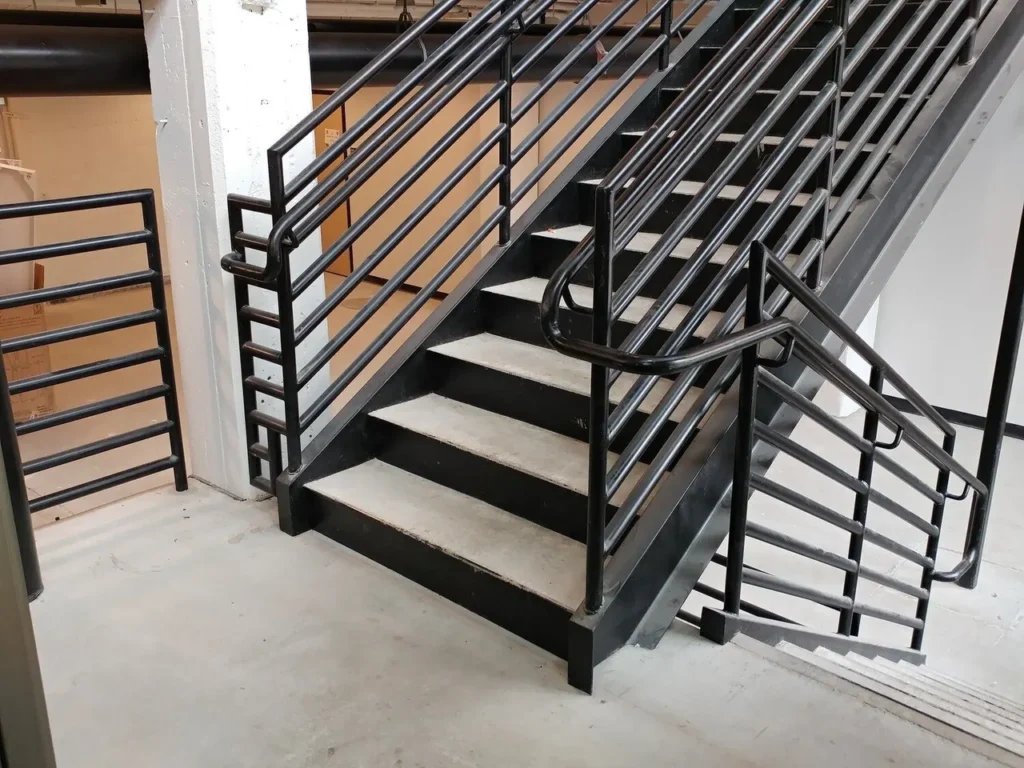
What Ottawa Winters Do to Outdoor Railings
The cold itself isn’t necessarily the biggest problem.
It’s what comes with the cold.
Water gets into joints, around fasteners, beneath damaged coatings and into other small areas where it can sit. Then temperatures drop, that moisture freezes, and the cycle repeats. Add road salt and salty slush to the mix and exposed steel can have a much harder time.
Post bases are one area worth paying attention to. They’re close to the deck surface or concrete, they can stay wet after snow melts, and they’re often exposed to salt and dirt. Welds, fasteners and scratches in the finish are other common places for problems to start.
That doesn’t mean steel railings can’t handle Ottawa winters. They can. A properly fabricated steel railing with good surface preparation and a suitable protective coating can last for many years.
The difference is that steel depends on its protective finish. If that finish gets damaged, the underlying material can start to corrode.
Aluminum doesn’t have that same conventional rust problem because it doesn’t contain iron. That is one reason it is such a popular option for exterior residential railings.
Aluminum Railings: Why They’re Popular in Ottawa
For a typical residential deck, aluminum is hard to beat when maintenance is the main concern.
The biggest advantage isn’t that aluminum is indestructible. It isn’t. The advantage is that you don’t have to worry about exposed aluminum turning into the familiar orange rust you see on unprotected steel.
Most residential aluminum railings are powder coated at the factory. A good finish gives the railing a clean appearance and provides another layer of protection from the elements.
Once installed, routine maintenance is fairly simple. Cleaning off dirt, salt residue and other buildup is usually all that’s required.
Aluminum makes sense when you want:
Less maintenance. You aren’t dealing with the same ongoing rust-prevention concerns as you are with steel.
Good salt resistance. This can be especially useful for railings near driveways, sidewalks and other areas where salt and salty snow accumulate.
A lighter system. Aluminum is much easier to handle than steel during installation and puts less dead weight on the supporting structure.
A modern appearance. There are plenty of aluminum systems that suit newer homes and contemporary decks.
A durable factory finish. Powder coating provides a consistent finish without requiring the homeowner to paint the railing after installation.
Aluminum Isn’t Completely Maintenance-Free
There is a tendency to describe aluminum railings as “maintenance-free.” That’s a little too generous.
Aluminum can still be scratched, dented and damaged. A snowblower, ladder, shovel or piece of outdoor equipment can do more damage than a normal Ottawa winter ever will.
A damaged finish should also be dealt with rather than ignored. Aluminum doesn’t rust in the same way steel does, but that doesn’t mean damaged components or hardware should be left alone.
The installation matters as well. Aluminum railings still need properly installed posts, suitable fasteners and a solid structure underneath them.
There’s also the issue of dissimilar metals. Aluminum can experience galvanic corrosion when it is improperly connected to certain other metals in the presence of moisture. Using appropriate hardware and installation practices helps avoid that problem.
Steel Railings: When They Still Make Sense
Steel has some qualities that aluminum doesn’t quite replicate.
It feels substantial. It handles impact well. And when you’re looking at a custom ornamental railing with curves, decorative elements or a particular architectural style, steel gives a fabricator a lot of freedom.
That’s why steel remains popular for older homes, traditional properties and projects where the railing itself is meant to be a significant design feature.
The downside is simple: steel needs protection from corrosion.
A good coating system keeps moisture away from the steel. Once that coating is scratched or chipped, however, the exposed area becomes vulnerable.
This is especially worth watching in Ottawa because salt and moisture tend to find their way into the same places over and over again.
Steel is worth considering when you want:
A heavier appearance. Steel has a solid, substantial look that some homeowners prefer.
Custom fabrication. Ornamental designs and unusual shapes can be easier to produce in steel.
Good impact resistance. Steel is less likely to dent from an everyday knock than many lightweight aluminum components.
A traditional appearance. It can be a better match for heritage-style homes and older properties.
Long service life. Properly fabricated, coated and maintained steel can remain in service for decades.
Where Steel Usually Needs Attention
When inspecting an older steel railing, these are some of the areas we’d pay particular attention to:
- The bottoms of posts
- Welds and joints
- Scratches and chips in the coating
- Fasteners
- Areas where water sits
- Areas where snow stays against the railing
- Sections exposed to road salt
- Connections between the railing and the deck or concrete
Finding a small rust spot doesn’t automatically mean the railing needs to be replaced. Localized corrosion can sometimes be cleaned up and repaired.
The concern is what is happening underneath the finish. If corrosion has weakened a post, weld or connection, painting over it isn’t going to solve the underlying problem.
Is Aluminum Better Near Road Salt?
Generally, yes, if your main concern is minimizing maintenance.
Think about where the railing is located.
A railing on the back of a property that rarely sees salt is in a very different environment from one beside a driveway where vehicles track salty slush across the pavement all winter.
The same applies to exterior stairs near a sidewalk. Snow gets piled up, salt gets mixed into the meltwater, and the railing can stay wet for extended periods.
That doesn’t make steel unsuitable. It just means the coating system deserves more attention.
For a steel railing in a high-salt location, surface preparation and the protective finish are particularly important. For an aluminum railing, the homeowner generally has less to worry about in terms of conventional rust developing beneath a damaged coating.
Which Railing Requires More Maintenance?
For most residential applications, the difference is fairly straightforward:
Aluminum generally requires less corrosion-related maintenance than steel.
Both materials should be cleaned and inspected periodically.
With aluminum, look for:
- Dents
- Loose posts or connections
- Damaged finishes
- Damaged hardware
- Movement in the railing
- Any components that have been bent by impact
With steel, add a closer inspection for:
- Rust
- Peeling paint or coating
- Rust around welds
- Corrosion at post bases
- Rust around fasteners
- Places where salt and water collect
There isn’t a magic maintenance schedule that applies to every steel railing. A railing beside a heavily salted driveway may need attention much sooner than one on a sheltered backyard deck.
The practical approach is simple: inspect the finish before small problems become larger corrosion problems.
What About the Cost?
It’s difficult to give a meaningful Ottawa price based only on whether the railing is aluminum or steel.
The design and installation can have just as much influence on the final cost.
For example, a simple straight aluminum railing is a very different project from a custom steel railing with decorative work, multiple stair sections and difficult access.
The quote can be affected by:
- Total railing length
- Number of posts
- Straight versus stair sections
- Railing height
- Removal of the existing railing
- Custom fabrication
- Decorative details
- Gates
- Finish requirements
- Site access
- Condition of the existing deck
- Concrete or anchoring requirements
- Structural repairs
That’s why two contractors can give very different prices for what initially appears to be the same job.
When comparing estimates, make sure you’re comparing the same scope of work. Check whether removal, disposal, stairs, structural repairs, concrete work and finishing are included.
A cheaper railing isn’t necessarily cheaper once the missing parts of the installation are added back in.
Don’t Overlook the Deck Structure
The railing isn’t independent of the deck.
A beautiful new aluminum or steel railing won’t perform properly if its posts are being attached to weak or deteriorated framing.
This is particularly important when replacing an older railing. The deck may look fine from above while the areas around old post connections have deteriorated over the years.
Before choosing a railing, we would want to know:
- Where will the new posts be attached?
- Is there enough solid framing at those locations?
- Are the existing joists, rim boards or stair structures in good condition?
- What fasteners will be used?
- Can water drain away from the post connections?
- If steel is being used, how will exposed steel be protected?
- Does the finished railing meet the applicable building requirements?
These questions can change the recommendation.
Sometimes the best railing choice isn’t the material you started out considering. If the existing structure needs repair, that should be addressed before installing the new railing.
What About the Ontario Building Code?
The railing material doesn’t determine whether the installation is code-compliant.
Guard and handrail requirements depend on the type of project and property, as well as the configuration of the deck or stairs. Requirements can also change over time, so older decks shouldn’t automatically be used as a reference for a new installation.
Depending on the project, requirements can include:
- Guard height
- Opening and baluster spacing
- Handrails on stairs
- Structural resistance
- Post and connection requirements
- Other requirements that apply to the property
The commonly discussed 100 mm sphere rule is one consideration for guard openings, but it isn’t the only thing that determines whether a railing installation is acceptable.
If you’re replacing an existing railing, it’s worth having the contractor confirm the requirements that apply to the new work rather than simply copying the dimensions of the old railing.
For multi-unit, commercial or unusual properties, the applicable requirements can be different again.
Aluminum or Steel: Which Should You Choose?
For a typical Ottawa homeowner, we’d break the decision down this way.
Aluminum is usually the better choice if you want:
- Minimal maintenance
- Less concern about rust
- Good resistance to salt exposure
- A lighter railing
- A modern appearance
- A factory powder-coated finish
- A practical option for a typical residential deck
Steel is worth considering if you want:
- A heavier, more traditional appearance
- Ornamental or decorative work
- Extensive customization
- Strong impact resistance
- A railing designed around a particular architectural style
Neither material is automatically the “right” answer.
If you’re replacing a straightforward residential deck railing and don’t have a strong preference for ornamental steel, we’d generally lean toward aluminum. It does the job without giving the homeowner another corrosion issue to keep an eye on.
If the railing is an important architectural feature and you want a particular custom design, steel may be worth the additional maintenance.
What We Look At Before Recommending a Railing
A railing should be chosen based on the property, not just a material comparison chart.
During an assessment, we’d look at things such as:
Exposure: Is the railing beside a salted road, driveway or sidewalk?
Deck condition: Is the existing structure sound enough for new railing posts?
Post locations: Where can the new posts actually be anchored?
Drainage: Will water sit around the bases or connections?
Existing railing: Is the old railing simply worn, or is there corrosion or structural deterioration?
Design: Does the house suit a modern aluminum system or a custom steel railing?
Maintenance expectations: Does the homeowner want the lowest-maintenance option, or is ongoing finish maintenance acceptable in exchange for a particular look?
Those details can make a bigger difference than the material name on the quote.
Frequently Asked Questions
Does aluminum railing rust in Ottawa?
No, aluminum does not develop the iron-oxide rust associated with carbon steel. It can still experience other forms of corrosion, finish damage or deterioration if it is poorly installed or exposed to damaging conditions.
Is steel railing a bad choice for Ottawa winters?
No. Steel can perform very well outdoors when it is properly fabricated, prepared and protected. The difference is that damage to the protective coating can eventually lead to corrosion.
Is aluminum better near road salt?
If low maintenance is the priority, generally yes. Aluminum doesn’t have the same underlying steel-rust problem. Steel can still be used successfully in salty environments, but its protective coating needs to be kept in good condition.
How long does an aluminum railing last?
There isn’t one guaranteed lifespan. The alloy, finish, fabrication, installation, exposure and maintenance all affect how long a railing remains serviceable. A properly installed residential aluminum railing can last for many years.
How long does a steel railing last?
A properly fabricated and maintained steel railing can also last for decades. Corrosion is one of the main things that can shorten its service life, particularly around damaged coatings, welds, post bases and connections.
Does a steel railing need to be repainted every five years?
Not necessarily. Five years isn’t a universal rule. The timing depends on the coating, the quality of the original preparation, exposure and the condition of the finish. Regular inspection is more useful than following an arbitrary repainting schedule.
Can railings be installed during an Ottawa winter?
Some railing work can be completed during colder weather, but not every part of every project is suitable for winter conditions. Concrete, adhesives, coatings and other temperature-sensitive materials can have specific installation requirements.
Should I replace a railing that has some rust?
Not automatically. Small areas of surface rust may be repairable. If the corrosion has weakened posts, welds, connections or other structural components, replacement may make more sense.
An inspection can usually tell you much more than the amount of visible rust alone.
The Bottom Line
For most Ottawa homeowners who want a low-maintenance deck railing, aluminum is the practical choice.
It handles the combination of moisture and road salt without the conventional rust problems associated with carbon steel, and a good powder-coated system can look good for years with relatively little upkeep.
Steel has its place. If you want a traditional appearance, ornamental details or a highly customized railing, properly protected steel can be an excellent option. Just understand that the finish is part of the maintenance equation.
And whichever material you choose, don’t overlook the installation.
The condition of the deck, the way the posts are attached, the hardware, drainage and the quality of the fabrication all affect how the finished railing performs.
If you’re replacing an old railing, it’s worth assessing the structure at the same time. A new railing is only as reliable as the deck or stairs supporting it.
Railing Experts Ottawa installs and repairs residential and commercial railing systems in the Ottawa area. If you’re unsure whether aluminum or steel makes more sense for your deck, the existing structure and post locations can be assessed before settling on a system.