Ottawa Condo Balcony Railings: A Property Manager’s Guide to Inspection, Repair and Replacement
Balcony railings tend to get attention when something changes.
A resident notices a post moving. Paint starts peeling and rust appears around a base plate. A piece of concrete breaks away near an anchor. A glass panel or its hardware looks damaged.
At that point, the property manager has several questions to answer:
- Is the problem limited to one balcony?
- Is the railing safe to remain in service?
- Could other balconies have the same condition?
- Does the problem involve the railing, its connection, or the supporting structure?
- Is this a repair, or is replacement more appropriate?
- Does the proposed work require engineering or a building permit?
- Who is responsible for the work under the condominium’s governing documents?
Those questions should be answered before a board commits to a large replacement project.
Ottawa’s weather also makes exterior railing condition worth watching. Moisture, freeze-thaw cycles, road salt and repeated exposure can contribute to corrosion and deterioration of both metal components and the materials supporting them.
The starting point is simple: find out what is actually wrong.
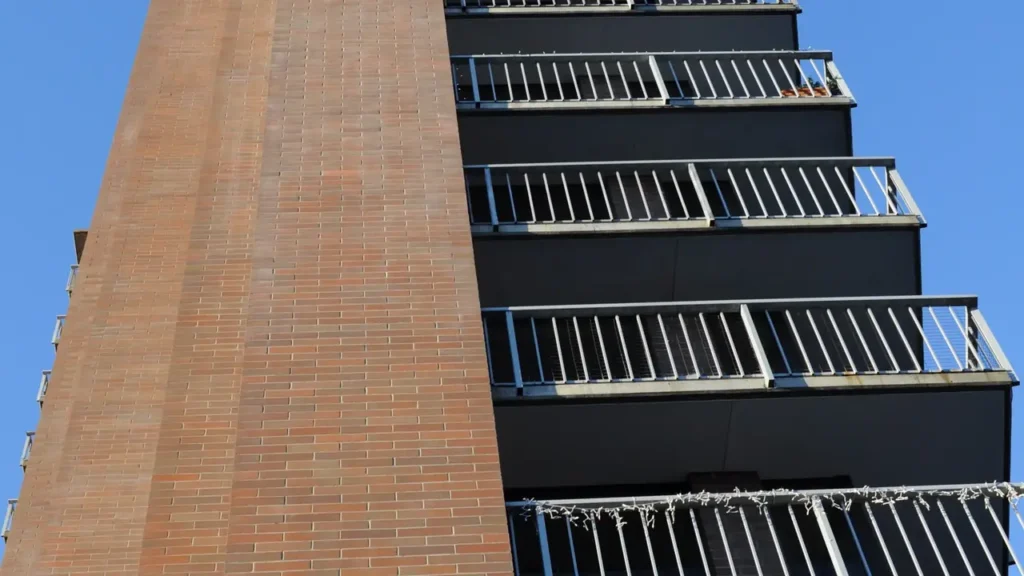
What commonly goes wrong with balcony railings?
A railing can look reasonably good from a distance while having a problem at one of its connections.
Common conditions include:
- Corrosion around posts, base plates, welds or fasteners
- Loose posts or other components
- Damaged or missing fasteners
- Cracked or spalled concrete around railing connections
- Deteriorated paint or protective coatings
- Damaged glass or glazing components
- Bent or deformed rails and balusters
- Previous repairs that have deteriorated
- Movement at a connection
- Water entering around penetrations or connection points
The connection deserves particular attention.
A post can appear sound while the concrete supporting it has deteriorated. Likewise, visible surface rust does not necessarily show how far corrosion has progressed inside or underneath a connection.
That is why a railing should not be assessed only by looking at it from several metres away.
Start with the connection
When a property manager receives a complaint about a loose or damaged railing, the first useful question is not necessarily how old the railing is.
Ask:
What is moving, and what is allowing it to move?
Possible causes include the railing component itself, the fasteners, the anchor, the base plate, the supporting concrete, or more than one of these.
Photographs should include both the overall railing and the connection detail. Close-up photographs of corrosion, cracked concrete, damaged welds, anchors, fasteners and previous repairs can make a later assessment much easier.
If a railing moves noticeably, has a damaged component, or otherwise appears unsafe, it should be investigated promptly rather than simply being added to a future maintenance list.
Ottawa weather and exterior deterioration
Exterior railing connections are exposed to water and seasonal temperature changes.
Water that reaches a connection can freeze and thaw repeatedly. Salt and other contaminants can contribute to corrosion. Concrete around anchors can crack or deteriorate, particularly where moisture reaches reinforcing steel or where the connection has allowed water to enter.
The most important areas to examine often include:
- Base plates
- Post connections
- Anchors
- Fasteners
- Welded joints
- Areas where water can collect
- Concrete around anchors
- Building-envelope penetrations
- Locations of previous repairs
The condition of the connection matters as much as the visible condition of the railing.
What should a railing inspection look at?
A useful assessment should document the railing itself and the way it is connected to the building.
Railing height
Measure representative locations where guard height needs to be checked.
Do not assume that one measurement represents every balcony in an older condominium. Balcony configurations, guard details and construction dates can vary.
Openings
Check openings between balusters, rails, panels and other components where applicable requirements need to be verified.
The commonly discussed 100 mm sphere requirement is part of the Ontario Building Code’s guard provisions, but it is not the only requirement that may apply. Guard height, loading, configuration and construction details also matter.
Posts and base plates
Look for:
- Movement
- Corrosion
- Deformation
- Cracked welds
- Damaged welds
- Distortion
- Previous repairs
- Evidence of water entering the connection
Anchors and fasteners
Visible anchors and fasteners should be checked for corrosion, looseness, damage and other signs that the connection may not be performing as intended.
Where important parts of the connection are concealed, a visual inspection may not be enough to establish their condition.
Supporting concrete
Examine the concrete around railing connections.
Cracking, spalling, exposed reinforcement and other deterioration can affect the condition of the connection and may require a separate concrete assessment.
Glass and glazing
For glass guards, inspect the glass and the supporting system, including channels, clamps, gaskets, brackets and other hardware.
A damaged glass panel should not be treated as an isolated cosmetic issue without considering the system supporting it.
Previous repairs
Previous repairs can provide useful information.
Look for replacement sections, different fasteners, welded repairs, patches, sealants and other modifications. These can help identify whether the railing has experienced recurring problems.
Comparable balconies
This is one of the most important steps in a condominium.
If one balcony has a loose post or corroded connection, determine whether other balconies use the same railing system and connection detail.
One defective railing does not prove that every railing in the building is defective.
It does provide a reason to investigate whether the same condition exists elsewhere.
Condition and Building Code compliance are different questions
A railing assessment should distinguish between two questions:
What condition is the existing railing in?
and:
What requirements apply to the existing condition and to the work being proposed?
Those are not interchangeable.
The Ontario Building Code contains requirements for guards, including provisions dealing with height, openings and specified loads. The applicable requirements depend on the building, the location and the work being undertaken. For example, current Code provisions include 1,070 mm guard-height requirements in specified circumstances, rather than making 1,070 mm a universal answer for every existing balcony railing.
This distinction matters particularly in older condominiums.
A railing constructed years ago does not automatically become defective simply because its dimensions differ from a current Code provision. Conversely, an older railing should not be assumed to satisfy every current requirement without considering its condition and the work being proposed.
If someone says an existing railing “fails code,” ask what requirement they are referring to and why it applies to the existing installation or proposed work.
That is a more useful conversation than relying on a single measurement.
What about the 100 mm rule?
The 100 mm sphere provision is one of the better-known guard requirements.
Ontario Building Code provisions address openings through guards and, subject to specified exceptions, require openings to prevent the passage of a spherical object of a particular diameter.
For property managers, the practical point is that opening size is only one part of the assessment.
Height, structural loading, climbing-related provisions, connections, construction and the specific Code requirements applicable to the building and proposed work also need to be considered.
If a project involves changing the configuration of an existing guard, the applicable requirements should be confirmed before the new system is designed.
A balcony guard is a structural component
A guard is not simply a decorative barrier.
It has to perform its intended function under the loads applicable to the installation, and those loads have to be transferred through the railing and its connections into the supporting structure.
That is why replacing a visible railing component without considering its connection can result in an incomplete repair.
For example, installing a new post on deteriorated concrete does not correct the deterioration underneath it.
A visual inspection can identify many obvious conditions, but it does not by itself establish the structural capacity of a guard or its anchorage.
Where structural capacity, concealed deterioration, anchorage or connection design is in question, an appropriately qualified professional should be involved.
Ottawa property standards also matter
Building Code compliance and property maintenance are not the same thing.
Ottawa’s Property Standards By-law addresses the maintenance of balconies, supporting structural members and guards. Among other requirements, balconies and supporting structural members are to be maintained free of decay, deterioration and other defects, and guards are required to be maintained in good repair in applicable circumstances.
That means a property manager should not reduce a railing problem to a question of whether the railing met the Building Code when it was originally installed.
There is also a maintenance question:
Is the existing balcony, guard and supporting structure being kept in a condition that does not create a defect or hazard?
The two questions should be considered separately.
Should a condo wait for its reserve fund study?
No.
A reserve fund study is a long-term capital planning tool. It should not be used as a reason to delay investigating a known potentially unsafe railing.
Ontario’s condominium regulations establish three classes of reserve fund studies:
- A comprehensive study
- An updated study based on a site inspection
- An updated study not based on a site inspection
A comprehensive study and an updated study based on a site inspection involve a visual site inspection of the property, including the component inventory where practicable. An updated study that is not based on a site inspection relies on corporation records and appropriate interviews instead.
The regulations also require reserve fund studies on a recurring three-year cycle, subject to the prescribed sequence of study types.
That does not mean a property manager should assume that every balcony has been physically inspected whenever a reserve fund study is updated.
If a resident reports a loose railing today, the condition should be investigated today.
A reserve fund study can help the corporation plan for major repair and replacement costs. It is not a substitute for responding to a known defect.
What should happen when one balcony has a problem?
A practical process is:
1. Document the condition
Record:
- Building
- Balcony or unit location
- Date
- Reported problem
- Photographs
- Any immediate safety concerns
Do this before the condition changes or a repair is made.
2. Consider immediate safety
If the guard appears unsafe, take appropriate temporary measures while the condition is investigated.
The correct response depends on the actual condition. The important point is not to treat a potentially unsafe guard as ordinary cosmetic maintenance.
3. Look at comparable balconies
Determine whether the same railing system and connection detail were used elsewhere.
This can help establish whether the issue appears isolated or may be part of a larger condition.
4. Get the appropriate assessment
A railing contractor may be able to assess visible deterioration and develop a repair or replacement scope.
Where the question involves structural capacity, concealed deterioration, anchorage or engineering design, an appropriately qualified professional should be involved.
5. Establish the scope
The appropriate result could be:
- A localized repair
- Replacement of a damaged component
- Repair of several connections
- Concrete repair
- Replacement of several railing sections
- Complete railing replacement
- Further investigation before deciding
There is no reason to assume that every railing problem requires complete replacement.
Repair or replacement?
An old railing does not automatically need to be replaced.
Repair may be appropriate when the underlying system remains suitable and the damaged components can be properly restored.
Replacement becomes more relevant where deterioration is widespread, connections are compromised, components are no longer practical to repair, or repeated repairs have left the system in poor condition.
The railing and its connection should be considered together.
Replacing a corroded post while leaving deteriorated concrete or compromised anchorage underneath it may not address the actual cause of the problem.
For larger projects, the contractor should also identify assumptions about concealed conditions before the board approves the work.
Older condominium railings need context
Older buildings require particular care when Code questions arise.
The requirements in effect when a railing was originally constructed are part of the building’s history. That does not mean an old railing is automatically acceptable today. It also does not mean every difference between an existing railing and a current Code provision requires wholesale replacement.
The more useful question is:
What requirements apply to the existing condition, and what requirements apply to the work being proposed?
That question should be answered before a board approves a major replacement based solely on a measurement or a general statement that the railing is “not to code.”
Does railing work require a permit in Ottawa?
It depends on the scope of the work.
A maintenance repair and a project involving structural alterations are not necessarily treated the same way.
Before construction begins, the contractor and any design professionals involved should establish:
- Whether a building permit is required
- Whether drawings are required
- Whether engineering is required
- Who is responsible for the permit
- Whether inspections are required
- What information needs to be submitted
Calling something a “repair” does not automatically determine whether a permit is required.
Conversely, not every railing maintenance task should be treated as though it were a major structural alteration.
Where there is uncertainty, confirm the requirement with the City of Ottawa or the appropriate design professional before work begins.
Who is responsible for a condo balcony railing?
This is partly a condominium-governance question.
The physical location of a railing does not, by itself, answer who is responsible for maintaining or repairing it.
The corporation’s declaration and other governing documents should be reviewed to determine responsibility for the relevant common element, exclusive-use common element or component.
Property managers should therefore avoid telling an owner who has to pay for railing work based solely on the fact that the railing serves that owner’s balcony.
Keep three questions separate:
- What condition requires attention?
- What approvals, permits or professional input are required?
- Who is responsible for the work and its cost under the condominium’s governing documents?
That separation can prevent unnecessary disputes.
Choosing a replacement railing
There is no single railing material that suits every condominium.
The choice depends on the building, connection requirements, appearance, maintenance expectations, durability, budget and the scope of the project.
Aluminum
Aluminum is commonly used for exterior railing systems because of its corrosion resistance and relatively low maintenance requirements.
The details still matter. Alloy, finish, fasteners, connections and installation all affect performance.
Glass
Glass can preserve views and create a more open appearance.
The glass specification, supporting hardware, channels, clamps, connections and installation method need to be appropriate for the particular system.
Steel
Steel can provide a strong and substantial railing system, but exterior steel requires appropriate corrosion protection and maintenance.
Cable
Cable systems provide an open appearance but require appropriate design of cable tension, spacing, connections and adjustment.
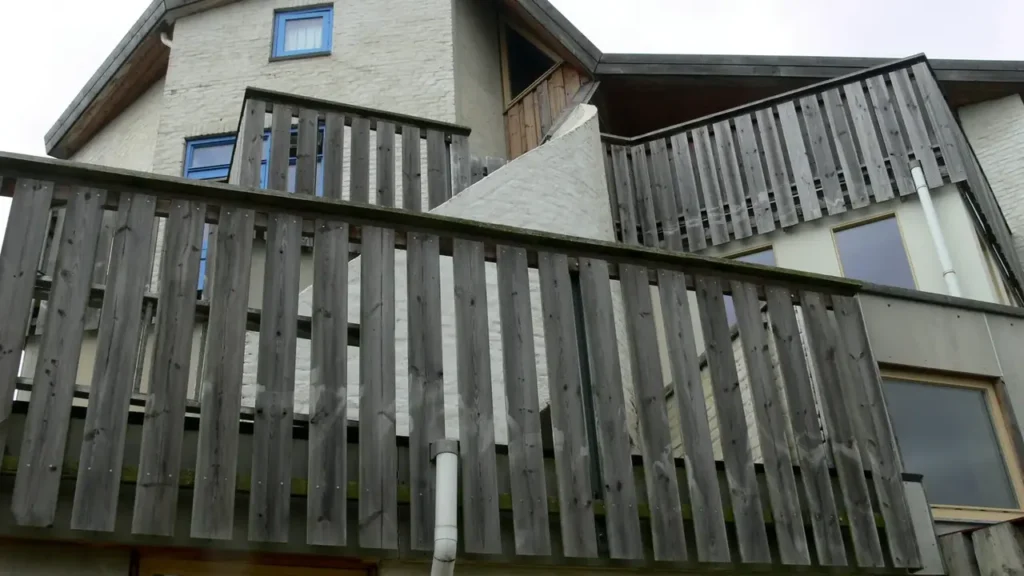
Wood
Wood may be suitable for some condominium applications, particularly in lower-rise buildings.
Its durability depends heavily on detailing, moisture management, coatings and maintenance.
The material should be selected as part of the overall railing system rather than considered separately from its connections and supporting structure.
What should be in the contractor’s proposal?
A condominium board should know exactly what it is approving.
A useful proposal should identify:
- Affected balconies or railing sections
- Observed condition
- Proposed work
- Materials and finishes
- Connection or anchoring approach
- Engineering requirements
- Permit responsibility
- Access requirements
- Resident coordination
- Schedule
- Warranty
- Cleanup
- Completion documentation
The proposal should also state important assumptions.
For example, if the condition of the concrete beneath a base plate cannot be confirmed until the railing is removed, the proposal should explain how that condition will be handled.
That is preferable to discovering an unexpected concrete-repair cost after the project has already started.
Railing projects in occupied condominiums
A railing replacement project is also a resident-management exercise.
Depending on the scope, the contractor may need to coordinate:
- Resident notices
- Balcony access
- Unit-by-unit scheduling
- Temporary barriers
- Material deliveries
- Elevator access
- Noise restrictions
- Weather delays
- Concrete curing
- Cleanup
For a larger project, the board and property manager should ask for a schedule showing how balconies will be handled.
Residents should know when their balcony will be unavailable and whether furniture, plants or other items need to be removed before work begins.
Keep the records
A completed railing project should leave a useful record behind.
Keep copies of:
- Inspection reports
- Photographs
- Measurements
- Engineering documents
- Permits
- Contractor proposals
- Product information
- Warranties
- Completion records
Those records can help with future maintenance and can give a future property manager a much clearer picture of what was repaired or replaced.
They can also be useful when the corporation’s next reserve fund study is prepared.
Questions to ask before hiring a railing contractor
What did you find?
A recommendation for replacement should be connected to an identifiable condition, not simply the age of the railing.
Did you inspect the connections?
A railing can look acceptable while its connection is deteriorating.
Did you look at other balconies?
If the same system was installed throughout the building, comparable locations may need to be assessed.
What could change the price?
Ask specifically about concealed concrete deterioration, damaged anchors, access, engineering, permits and other assumptions.
Is engineering required?
If structural capacity or connection design is involved, establish who is responsible for the engineering.
Is a permit required?
Confirm who is responsible for determining and obtaining any required permit before construction starts.
What will we receive when the project is finished?
Ask for relevant photographs, warranties, product information, permits, inspection documentation and completion records.
How will residents be affected?
The contractor should be able to explain balcony closures, access requirements, scheduling, noise, cleanup and other resident impacts.
Railing Experts Ottawa
When a condominium is dealing with loose posts, corrosion, damaged connections or aging balcony railings, the first useful step is usually an assessment of the existing condition.
The goal is to establish what is actually deteriorated, determine whether the issue appears isolated or recurring, and develop a scope of work that the board can understand and price.
Railing Experts Ottawa provides railing services for condominium, residential and commercial properties in Ottawa.
Its balcony and condo railing services cover condominium railing projects, while its railing repair services address situations where repair may be appropriate instead of full replacement.
Property managers can contact Railing Experts Ottawa to discuss an existing railing condition and the work that may be required.
Frequently Asked Questions
What height does an Ottawa condo balcony guard need to be?
The Ontario Building Code contains minimum guard-height requirements that vary depending on the location and circumstances. A 1,070 mm requirement applies in specified situations, but it should not be treated as a universal measurement for every existing condominium balcony.
For an existing building, the applicable requirements should be established based on the building’s history, the location and the work being proposed.
Does every condo reserve fund study include a physical inspection of balcony railings?
No.
Ontario’s regulations distinguish between comprehensive studies, updated studies based on a site inspection and updated studies that are not based on a site inspection. The latter relies on corporation records and appropriate interviews rather than the site-inspection process specified for the other study types.
Should a condo wait for its reserve fund study before investigating a bad railing?
No.
A known potentially unsafe railing should not be left unaddressed simply because a reserve fund study is scheduled.
A reserve fund study is part of long-term capital planning. It does not replace an appropriate response to a known condition.
Does one bad railing mean the whole building needs new railings?
Not necessarily.
Other balconies should be considered when there is reason to believe they share the same railing system, connection detail or deterioration mechanism.
The final scope should be based on the conditions actually found.
Does an old railing automatically fail today’s Building Code?
No.
An existing railing’s age or difference from a current measurement does not, by itself, establish that it must be replaced.
The building’s history, existing condition and proposed work need to be considered.
Does balcony railing work require a permit in Ottawa?
The answer depends on the scope of the work and applicable municipal requirements.
Confirm the requirements before construction, particularly where the work involves structural alterations or new connections.
Who should inspect a loose balcony railing?
A qualified railing contractor may be able to assess many visible conditions.
Where the issue involves structural capacity, concealed deterioration, anchorage or engineering design, an appropriately qualified professional should be involved.
Who pays for a condo balcony railing repair?
That depends on the condominium’s governing documents and the particular component involved.
The declaration and applicable condominium documents should be reviewed before assigning responsibility for the repair or expense.
What should a property manager do if a railing appears unsafe?
Document the condition, take appropriate temporary safety measures where necessary, and arrange an assessment promptly.
Do not leave a potentially unsafe guard unaddressed simply because the next reserve fund study has not yet occurred.
What railing material should a condo choose?
There is no universal answer.
Aluminum, glass, steel, cable and wood have different maintenance, appearance, durability and installation considerations. The building, connection detail, budget and project requirements should all be considered.
How long does condo railing replacement take?
There is no useful single schedule for every building.
The duration depends on the number of balconies, condition of the existing railing and supporting structure, material selection, engineering, permits, material availability, weather, access and resident coordination.
A site assessment and defined scope are the best starting points for establishing a realistic project schedule.
Final takeaway
For a condominium property manager, a railing problem should be treated as a condition-assessment issue first and a replacement decision second.
Document what was found. Look at the connection. Consider whether other balconies use the same detail. Bring in the appropriate professional when structural questions arise. Confirm the applicable municipal and Building Code requirements before undertaking significant work. Check the condominium’s governing documents before assigning responsibility or cost.
The objective is not to replace every old railing.
It is to understand the condition well enough to make the right repair, replacement and maintenance decisions for the building.